Five Meaningful Outcomes from a Medicare Exercise Physiology Plan
Many people are referred to Exercise Physiology through Medicare but are not always sure what to expect.
In practice, the benefits often go well beyond the session itself. With the right support, people may improve strength, build confidence, move with less stiffness, and find everyday tasks easier to manage.
At Move 2 Thrive Clinic, we often see that the most meaningful changes are not just physical. They show up in day-to-day life — walking more confidently, keeping up with family, and feeling more capable at home and in the community.
Here is one recent example of the kind of progress that can happen with consistent, guided support from an Accredited Exercise Physiologist.
1. Less joint stiffness and more energy for everyday life
One of the first changes this client noticed was less joint stiffness.
With a combination of supervised Exercise Physiology sessions and a simple home program, movement started to feel easier and more manageable. That physical change mattered, but what mattered more was what it allowed them to do outside the clinic.
They had more energy for everyday tasks, more confidence moving around, and more capacity to spend time with their grandchildren.
This is often the real goal of Exercise Physiology. Not just exercise for its own sake, but better function in everyday life.
2. Exercise stopped feeling overwhelming
A common concern we hear is, “I know I should exercise, but I don’t know where to start.”
That uncertainty can be even stronger when someone is dealing with pain, fatigue, reduced confidence, or a long period of inactivity.
For this client, exercise initially felt unfamiliar and difficult to maintain. Over time, with clear guidance, an appropriate starting point, and steady progression, it began to feel more manageable.
That shift matters. Long-term change often starts when exercise feels achievable, not intimidating.
For some people, the starting point is smaller and more practical than they expected. That is not a setback. It is usually the foundation for more consistent progress.
Want to understand what Exercise Physiology involves?
Learn more about how guided exercise can support strength, confidence, and day-to-day function at Move 2 Thrive Clinic.
3. Strength and balance improved in measurable ways
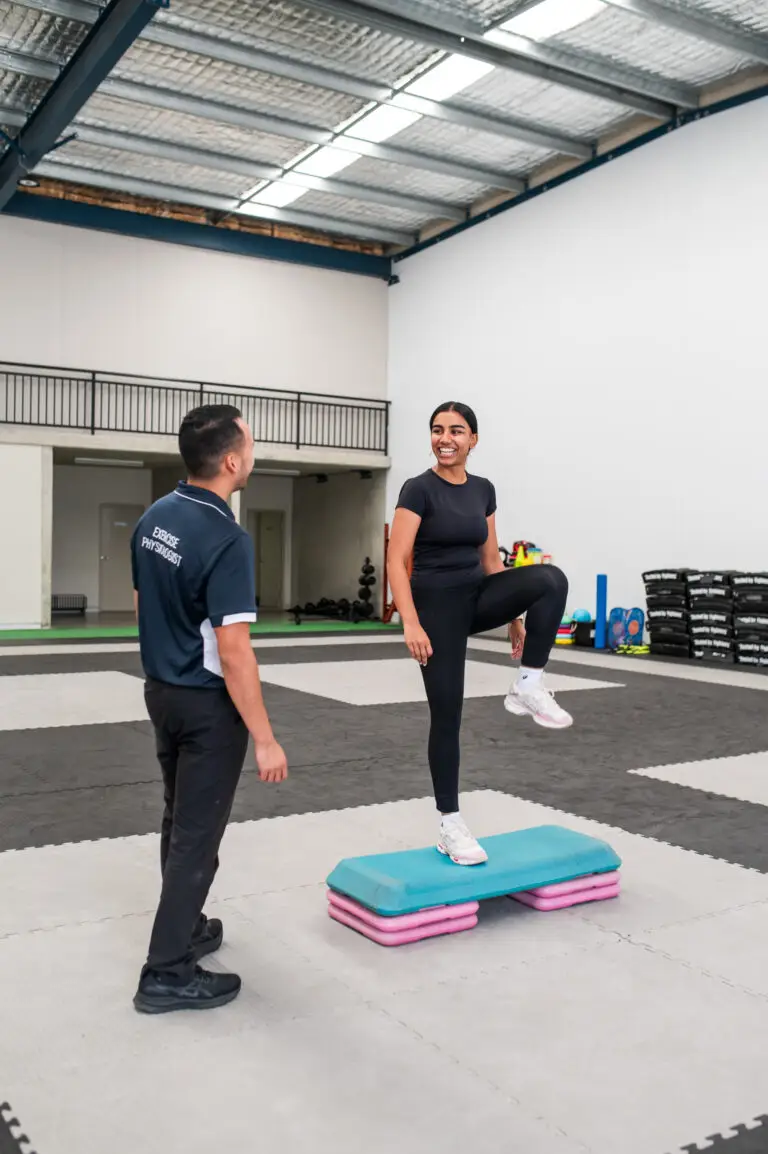
This progress was not only something the client could feel. It was also something we could measure over time.
Across their Exercise Physiology plan, they achieved:
- a 15 to 20 second improvement in single-leg balance
- a 5 kg increase in upper limb strength
- a 22.5 kg increase in lower limb strength
- stable blood pressure readings
- noticeably improved confidence with movement
These changes matter because better strength and balance can help make everyday activities feel safer and more manageable. For many adults, this can also support independence and reduce the risk of falls.
In our clinic in Minchinbury, and as we move into St Marys, we often see that measurable progress helps people feel more confident in what their body can do again.
4. Weight loss became a result of consistency
Weight loss was not the primary focus of this plan, but it became one outcome of more consistent movement and a better routine.
Since the start of the year, this client has lost 8 kg, including 3 kg during a period supported by Medicare Exercise Physiology sessions and our Move for Life group classes.
What made this meaningful was not just the number itself. It was the way the progress happened — gradually, realistically, and with support.
There were no extremes involved. Just structured exercise, appropriate progression, and regular accountability.
A common mistake people make is assuming they need to do everything perfectly to see progress. In reality, consistency is usually more important than intensity.
5. Knowledge and confidence that can last beyond the sessions
One of the most valuable outcomes was not just physical improvement. It was greater understanding.
Over time, this client learned:
- how to perform strength exercises safely
- how to move with better technique and control
- how to stay active more independently between sessions
This is a big part of what Exercise Physiology should offer. It is not just about being supervised in a session. It is about building the confidence, knowledge, and capacity to keep going outside the clinic as well.
That education can make a real difference, especially for people who have previously felt unsure about what is safe, what is helpful, or where to begin.
Not sure whether Exercise Physiology is right for you?
Get in touch with our team to learn more about in-gym and mobile Exercise Physiology options.
Why Medicare Exercise Physiology can make a real difference
Medicare-supported Exercise Physiology may be suitable for people managing chronic conditions, reduced strength or balance, low confidence with movement, or ongoing difficulty staying active, depending on their GP management plan.
With the right support, the benefits often carry over into everyday life. That might mean getting out of a chair more easily, walking with more confidence, keeping up with family, or feeling more capable doing daily tasks.
It is not about doing more exercise for the sake of it.
It is about building strength, function, confidence, and long-term capacity.
Looking for an Exercise Physiologist in Minchinbury or St Marys?
Move 2 Thrive Clinic provides in-gym Exercise Physiology in Minchinbury and St Marys, along with mobile Exercise Physiology across Western Sydney and Greater Sydney.
If you have a Medicare plan, or are speaking with your GP about whether Exercise Physiology may be appropriate for you, our team can help you understand the next step.
To enquire or book an appointment, contact Move 2 Thrive Clinic for support with in-gym or mobile Exercise Physiology across Minchinbury, St Marys, Western Sydney, and Greater Sydney.
Key takeaways
- Medicare Exercise Physiology can support more than just exercise habits
- Meaningful outcomes may include better strength, balance, confidence, and independence
- Progress often comes from consistent, guided movement rather than extreme changes
- Education and self-management are an important part of long-term results
- Support is available through in-gym sessions in Minchinbury and St Marys, and mobile services across Western Sydney and Greater Sydney
Written by Amisha Singh an Accredited Exercise Physiologist at Move 2 Thrive Clinic
An Accredited Exercise Physiologist at Move 2 Thrive Clinic, supporting adults across Minchinbury, St Marys, Western Sydney, and Greater Sydney with practical, evidence-based exercise for strength, function, confidence, and long-term health.